

The year 2024 will be (and in part already has been) full of electoral events. This led us to ask a simple question: how informed are Italians about them?
In March, we surveyed a sample of voters aged 18 to 74, asking them whether they were aware of any elections scheduled for the months ahead. The results showed that not many people were well informed about what lay ahead.
Among voters living in municipalities where local elections were to be held alongside the European elections, only slightly more than one in five Italians was aware of all the electoral events that would directly involve them. Among those who knew that elections would take place in the coming months, most were aware of the European elections but not of the local elections awaiting them. Conversely, only 12% of voters knew they would be electing their mayor while remaining unaware of their role as European citizens in the upcoming European elections.
Beyond these groups, more than one-third of respondents believed that there would be no political elections at all in 2024.
Let’s take a closer look.
Starting with the European elections, they remained unknown for as many as 46% of Italians. This means that only slightly more than half of the country’s voters were aware that on June 8 and 9 they would be called upon to elect Italy’s new representatives to the European Parliament.
Although the topic had already been discussed publicly for several months, it appears that the communication campaign surrounding the elections had not yet achieved its intended effect, at least by the end of March. As a result, there was still considerable room to increase public awareness and encourage voter participation.
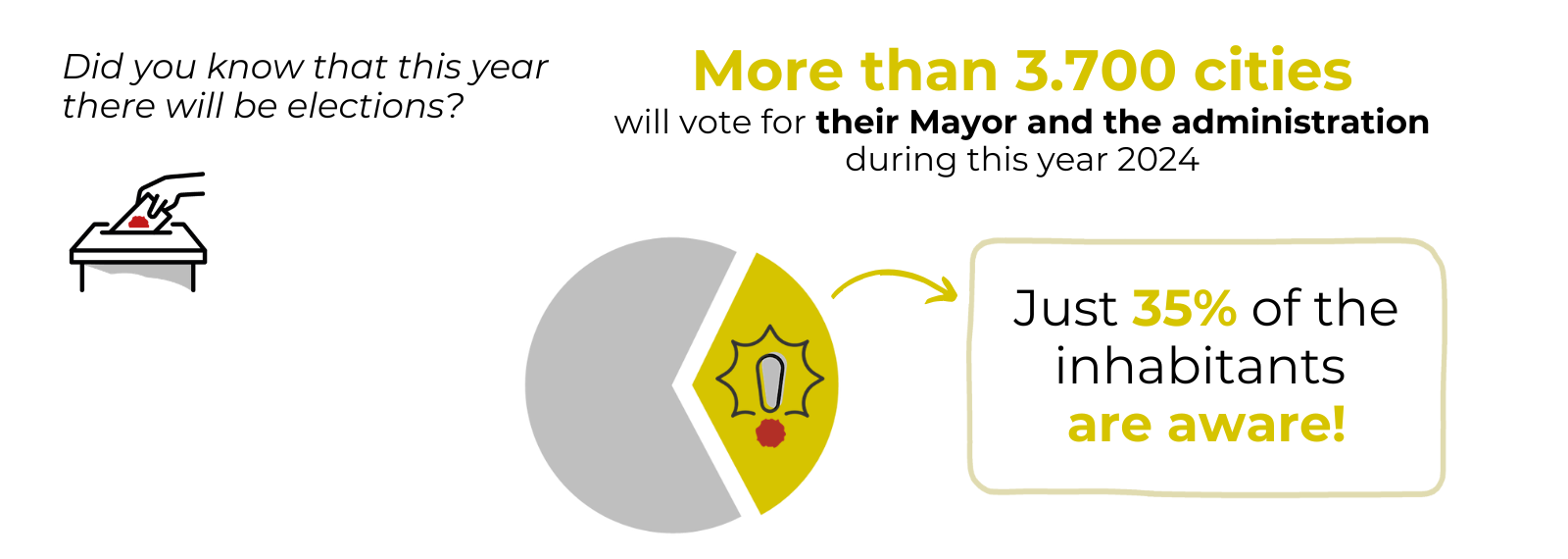
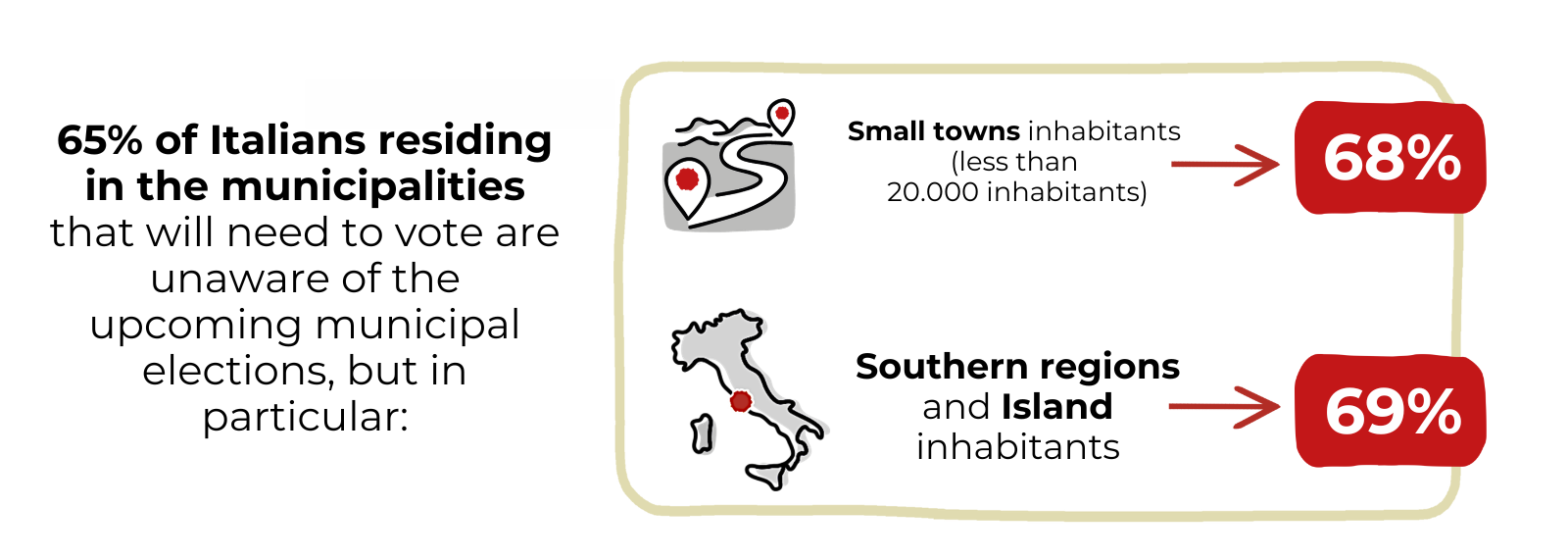
However, the situation was even more critical when it came to local elections. Among residents of the over 3,700 Italian municipalities involved in the administrative elections, 65% of respondents were unaware that they would be expected to vote. These elections were also scheduled to take place in less than two months, concurrently with the European elections. Yet it seemed that the electoral campaign had either not yet begun or had not reached a level capable of engaging public attention.
More specifically, among smaller municipalities (with fewer than 20,000 inhabitants), this figure rose by an additional 3 percentage points. It even increased by 4 percentage points among municipalities located in Southern Italy and the Islands.
In short, although Election Day 2024 was just around the corner, there was still a great deal of work to be done in informing voters. This is a crucial issue, one that could have significant implications for voter turnout and levels of electoral abstention in Italy.
Paola Merulla explored this topic in greater depth during her interview with Comunicazione Politica, Marco Venturini’s podcast. Listen to the interview here.
View and share this content on our Linkedin profile.