

The exceptionally high turnout, unseen in years, was (without any doubt) the major achievement of this referendum on the justice system: an outcome that restores confidence in a tool that seemed increasingly unable to engage voters.
Indeed, the survey we conducted a few days before the vote had revealed widespread awareness of the upcoming ballot and of the voting rules, under which no quorum was required for the result to be valid. The intention to go to the polls also appeared high on both sides, with a slight edge among left-leaning voters.
However, when we asked respondents how they would vote if the referendum were held the next day, our survey found slightly more votes for Yes than for No, unlike the actual result.
So why, within just a few days, did the No vote end up prevailing?
Much may certainly have depended on the campaigning in those very last days, which we know is usually decisive, especially among undecided voters. But other factors may also have come into play, and our study had picked up some telling signs of them.
As already mentioned, left-leaning voters were certainly more inclined to go to the polls, but other things need to be taken into account.
Among those intending to vote No, in fact, there was a stronger sense of how important it was to actually turn out, partly as a direct consequence of the absence of quorum. This motivation appeared less compelling among those intending to vote Yes, who were therefore less determined overall to go to the polling stations. Moderate centre-right voters were not particularly fired up, especially older ones.
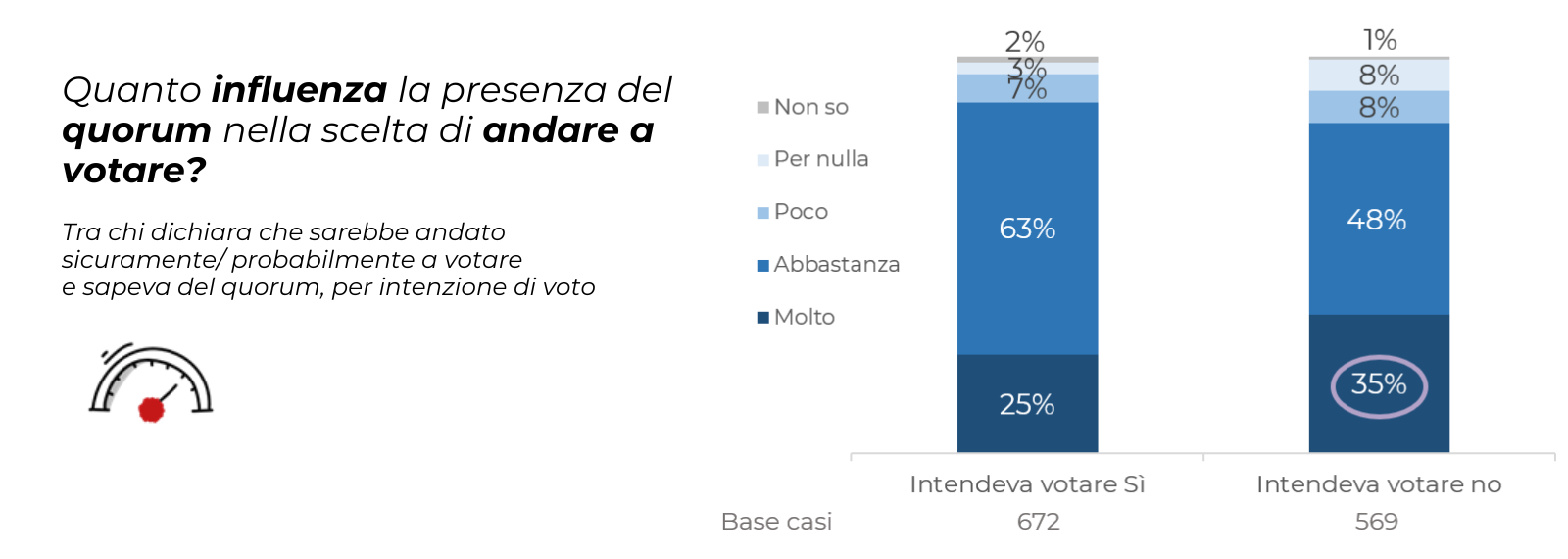
Turnout, then, was particularly high, but evidently mainly among No voters, who were in fact perhaps a minority (in absolute terms, across the population as a whole) compared with those who would have voted Yes.
In previous referendums, by contrast, in which a quorum was required, low turnout was often interpreted not only as a vote against, but also as a sign of general disengagement, already very visible in national and local elections as well. This referendum, however, tells a different story, with a particularly positive note regarding young people, who were more aware of the referendum and also more determined to take part in the vote.
The referendum question, which a section of the electorate felt particularly strongly about, and the absence of a quorum both played a part in driving participation, showing that Italians’ and young people’s interest in politics has not been entirely lost.
To see all the data we collected and the results of our analysis, read and download the report here: The Referendum on the Separation of Judicial Careers.